


Civilised Nationhood: Reached Through the Volunteers
With the launching of the Volunteer Movement, we the Irish people not only reassume our manhood, but once again voice our claim to stand among the nations of the world in the full tradition of the Christian civilisation. For a hundred and fourteen years we have suffered the degradation consequent on our close dependence on the most degraded nation of Europe.
Perhaps, indeed, “Nation” is too proud a name to apply to a people who had lost the traditions that have raised all Christian communities to the dignity of civilised nationhood – the tradition of arms, the tradition of honour, and the tradition of Faith.
Most significant in this regard is their abandonment of the term Nation for the term Empire, a word heavy with that arrogance which is the cause of the essential impotence of power based on the subjugation and subjection of peoples; a word charged with echoes of the toppling walls of Rome and of Byzantium.
We have suffered from such dependence, but we have not fallen so low as to acquiesce in the destruction of our traditions, or even in their suppression. From the earliest times down to the present generation we had kept to the happy custom of bearing arms in the defence of our lives and liberties, and though we have thus preserved our honour and our Faith, we must not be blind to the extent of our separation from the common heritage of Christendom, due to our relations with England.
With the exception of England there is no nation in Europe that cannot in case of need call to arms not merely a small section of professional fighting men (England’s army forms about 1 in 200 of its population), but the majority of the able-bodied men of the nation.
This is the logical consequence of the Christian civilisation, and is founded on the eternal principle that a man having in himself to found a family must also have in himself the power to defend a family and assure its continued existence; an individual responsible or liable to be responsible for an essential portion of the State must also be held responsible for its preservation. Thus it is at once the duty and the dignity of Christian manhood to bear arms, even if only for their symbolism, and if there were to be no likelihood of the necessity for their use.
A man is not fully a man until he holds the power of life and death. A man is not fully a man, not is a nation a nation without the power to direct a policy and to ensure civil and religious liberty to those who demand these blessings. For this reason conscription is the prevailing military policy among the Powers of Europe. The whole nation must bear arms.
If its men’s training is to be of such a kind that they would be prevented from following their ordinary trades and profession, and if at the same time the number of the army is to be so great as to preclude a compensating rate of payment to the professional classes, their volunteers must give place to conscripts. If, as with ourselves, the conditions are not so stringent, the majority of men forming the nation must volunteer and submit themselves to training and discipline.
For it is necessary to realise now and forever what our long and bitter experience should surely have taught us, that a man no matter how great his capability and courage is of no importance in fighting except in his place in an army; that an army is not an aggregation of individuals but a co-ordinated and centralised instrument of policy; that actual fighting is frequently the least of the duties of an army, and that the two things that condition all uses of armies in any country are that country’s history and geography.
These truths so often unrealised in Ireland are, of course, mere commonplaces on the Continent. In England an exaggerated importance attached to them may help in some measure to account for the abuse of professionalism in military matters which has followed the complete loss of ideals and the decay of public spirit among the English people.
Yet with all their hatred of vital action and of the freedom that co-operation in just government alone can give, and in spite of their outcry for the liberty to do nothing whenever conscription or anything approaching universal training is mentioned, the English people will have to swallow a hastily rushed Act of Parliament providing for instant compulsory military service if and when any invasion of England by a Foreign Power becomes imminent. Needless to say it will then be too late.
An army is not made in a moment. Owing also to the mystery that enwraps modern diplomacy, negotiations are kept so secret that no warning could be given officially until all was practically over. Only those who have come to close quarters with some modern campaign, and a few who read history with understanding, can picture anything of the hopelessness and horror of the inhabitants of a country who are forced to stand by helpless and impotent while the destinies of their home and country are bartered away by outside negotiators on points of policy or military success.
This that might have been our fate at any time during the past century, when it would have been a questionable evil, will certainly be our fate in the years to come when its evilness will be beyond question, unless we take this opportunity of creating such a force in support of our own government as will infallibly make the voice of the Irish people audible in the Councils of Europe, and our decision the supreme factor in all questions regarding this race and nation.
To-day, thank God, our task is begun. Owing to happy coincidence of causes we have been able to inaugurate a movement that has put new heart into the builders of the Irish Nation at the very moment when they need most encouragement, the moment when the debris has been cleared away from the foundations, laid so long ago and their colossal work of reconstruction is about to begin.
The conditions which made this movement possible are chiefly two. First, the absurd blunder perpetrated by the leaders of the Unionist Party in England in permitting themselves to be led by the nose by a little ring of fanatics and “interested” persons, under the impression that they had found a sufficiently sentimental and alarming catchword to rouse the English voters to prevent the passing of the Home Rule Bill; and for the sake of a party-cry committing themselves to the principle of military agitation as politically legitimate.
The second condition is a nobler one. It is that the revivifying power of liberty is so great and its flood of light so overwhelming that its mere approach is sufficient to dispel the darknesses of lassitude consequent on complete or partial slavery, and to brace a people sinking into servitude and decadence to undertake its own regeneration.
JOSEPH PLUNKETT.
Originally published in The Irish Volunteer.
Article originally published on: Saturday 7th February 1914If you'd like to help with producing further articles, please sign up here!
More articles can be found here.
The project will follow in their footsteps along the path laid down by Hyde, O'Conaire, MacNeill, Cusack and many others through sharing news, ideas, articles of Irish cultural interest and more, as well as helping to support Irish language and cultural initiatives. You can find out more about An Claíomh Solais by clicking on the buttons below, or join our team as we begin the great Gaelic restoration!
You don't get to betray us and smile
You don’t get to lecture us on our blood and our past,
Famine headstones paving a road any can pass.
Our villages hollow, our young forced to flee,
While newcomers are housed and our people come last —
that’s your “compassionate” decree.
We remember the coffin ships, the millions who died,
Under cold British rules and indifferent pride.
That horror was on us by foreign command —
Not a blank cheque for every stranger to claim our land.
We emigrated through hardship, built lives far a
Read more...
Ode to John Devoy, a Forgotten Hero
A forgotten hero it has been said
Was born in Kill at a time many tears in this country were shed
Just before the Great Hunger this child did arrive
And lucky for us Irish he was one who would survive
An immense gra for Irish freedom he held in his heart
And it was when he was young that he first made a start
In his quest to release us Irish from beneath British rule
He was beaten for not singing “God Save the Queen” in his school
Involved in three wars he was one of a few
To take part in all conflicts and see
Read more...
An Interview with Patrick Quinlan from the National Party
Welcome to another in our series of interviews with prominent figures and rising stars in contemporary Irish nationalism!
Today we're talking to Patrick Quinlan from the National Party, a rapidly growing and influential political organisation in Ireland, one of the few if not the only such group with actual elected representatives. Read on to learn about engaging with the system, winning hearts and minds, and the political future for Irish nationalism!
Perhaps you could tell us a little bit about yourself to begin with?
I'm Patrick Quin
Read more...
An interview with Rob Carry
Good afternoon! As part of our ongoing series on rising nationalist stars and voices in Ireland, we're delighted to be able to introduce local community activist, businessman and politician, Rob Carry!
We've been talking about his amazing work for and with his community, as well as his aspirations and plans for the future.
ACS: Can you tell us a little about yourself, your background, and where you're coming from?
RC: Sure. So I’m a small business owner (I run a commercial gym, a martial arts club
Read more...
An Interview with Gavin from Offgrid Ireland
Good morning and welcome to another in our series of interviews with prominent figures and rising stars in modern Irish nationalism!
Today we're talking to Gavin from a prominent and influential online discussion group, the X SPACES Éire Community. This very active group has at one time or another hosted many well-known nationalist names and continues to grow in both size and influence.
ACS: Can you share with our readers some of your background and a little about who you are?
OI: I am an Offaly man, born and bred, now in my la
Read more...
A New Voice For Ireland
We are pleased to introduce a new rising star among Irish nationalists - although she needs no introduction for many of you who have attended Irish Ireland protests recently - Ciara Ní Mhainnín! Her uncompromising voice offers a clear challenge to the establishment and a great example for us all to follow.
Ciara very kindly took the time to join us in an online interview, which we are delighted to publish here.
ACS: What made you decide to get involved with the Irish Ireland cause, was there one particular event or was it more of a process?
Read more...
Recent News
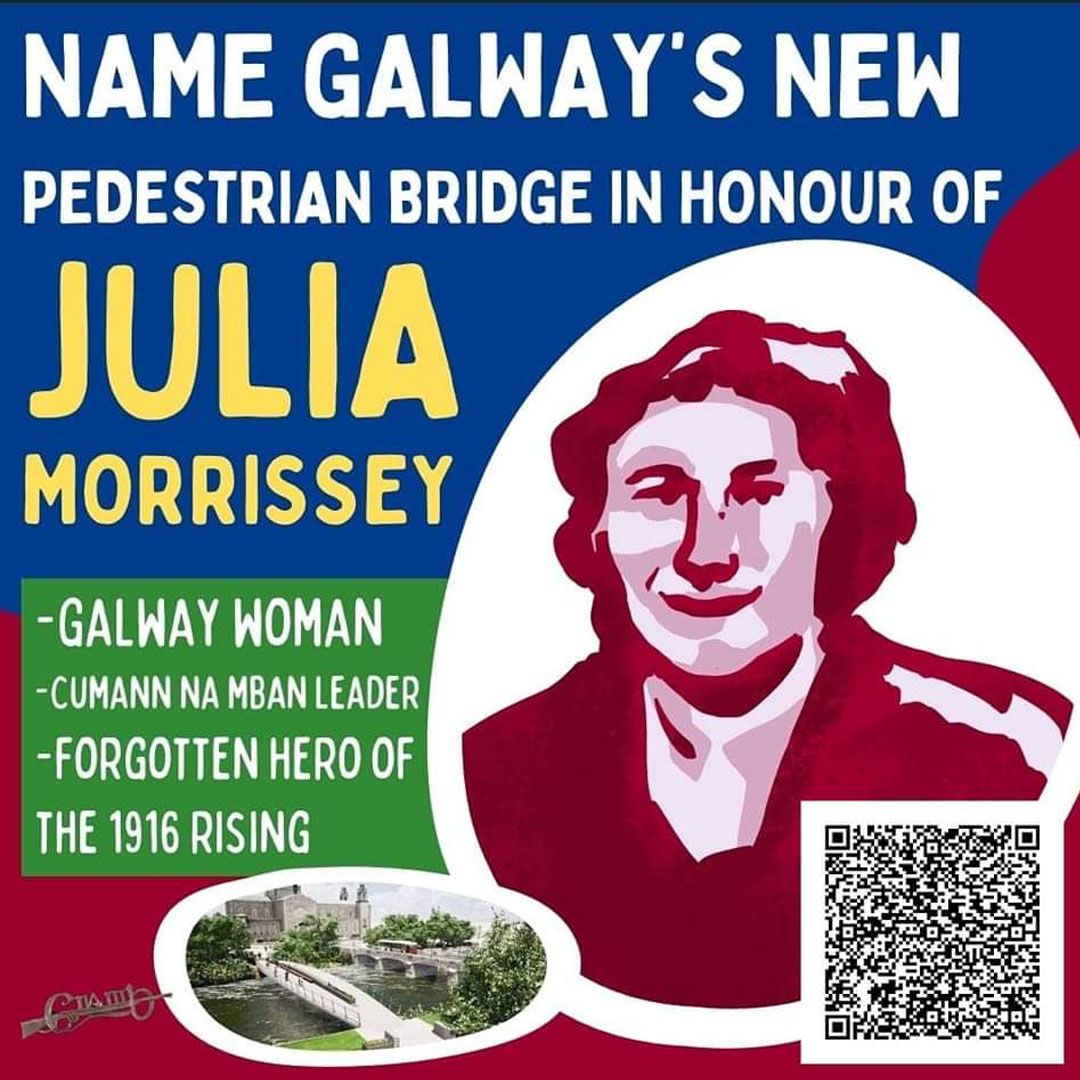
Name Galway's New Pedestrian Bridge in Honour of 1916 Hero Julia Morrissey
An Athenry native, Julia Morrissey, was a key figure in Cumann na mBan's Galway branch. In 1916, she commanded a group of 50 women during Easter week, as part of the rebellion in Galway that was led by Liam Mellows. When Mellows first came to Athenry in 1915, Mor... [more]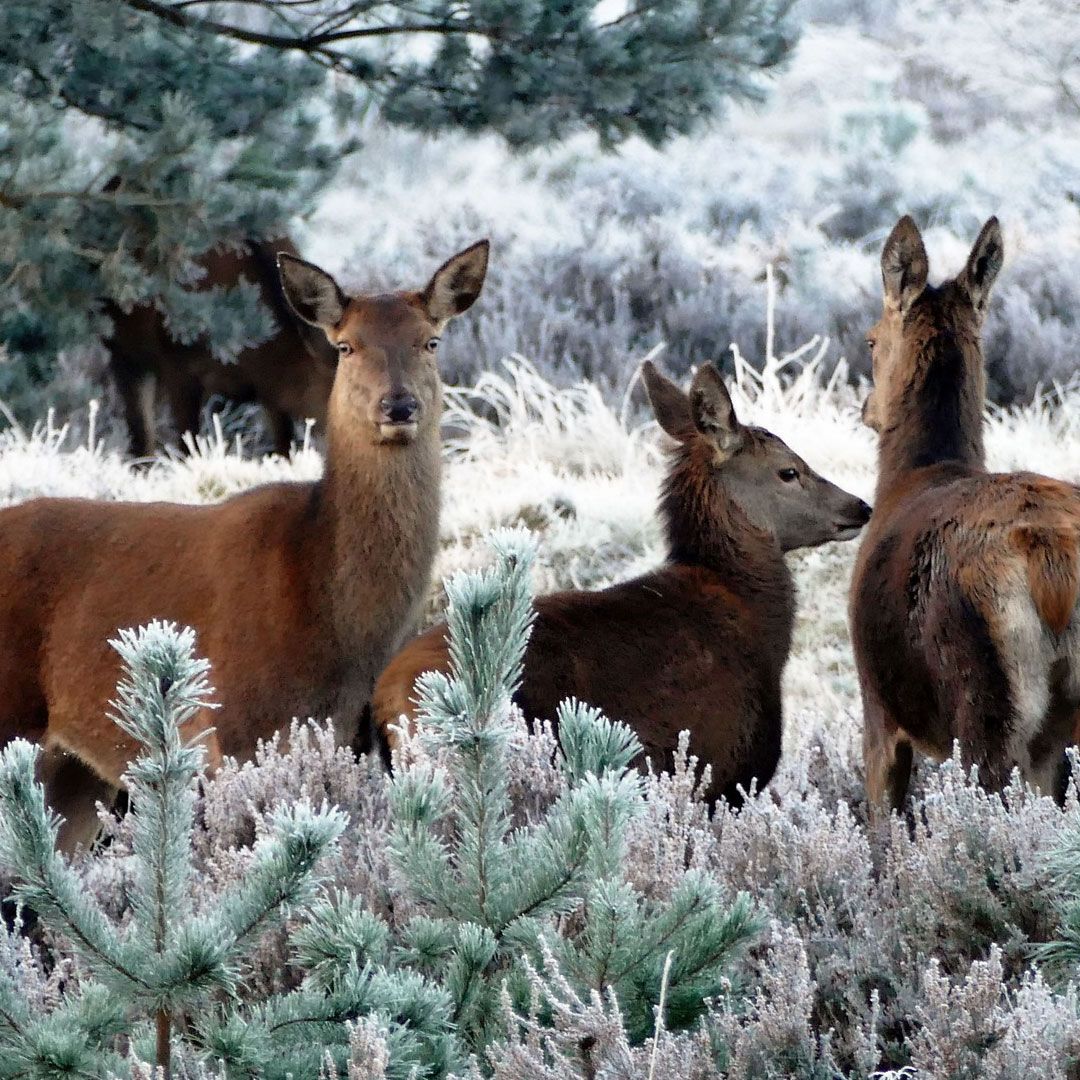
Human activity discovered in Ireland 33000 years ago
A REINDEER BONE fragment uncovered in a cave contains a revelation set to dramatically alter the understanding of Irish human history. The bone fragment was found at Castlepook Cave near Doneraile in north Cork where a mammoth bone was discovered in 1972. T... [more]
Wolfe Tones announce anniversary gig
After breaking records at Electric Picnic over the weekend, the Wolfe Tones are set to mark six decades of making music with an anniversary gig in Dublin next year. The Wolfe Tones drew the largest crowd to date to the festival’s Electric Arena on Sunday as a s... [more]
RIA culture night 2023
Come and join us on Culture Night 2023, we will have lots of cultural activities for all ages! Explore the Royal Irish Academy - a hidden Georgian gem tucked away on Dawson Street. View the earliest example of Irish writing - the 6th century Cathach, have a go at som... [more]
More than one million people are actively learning Irish
More than one million people are actively learning Irish on Duolingo according to data from the language app. A recent report (June 2021) listed Irish as the 16th most popular language to learn on the app, with 1.10 million users actively learning the language. ... [more]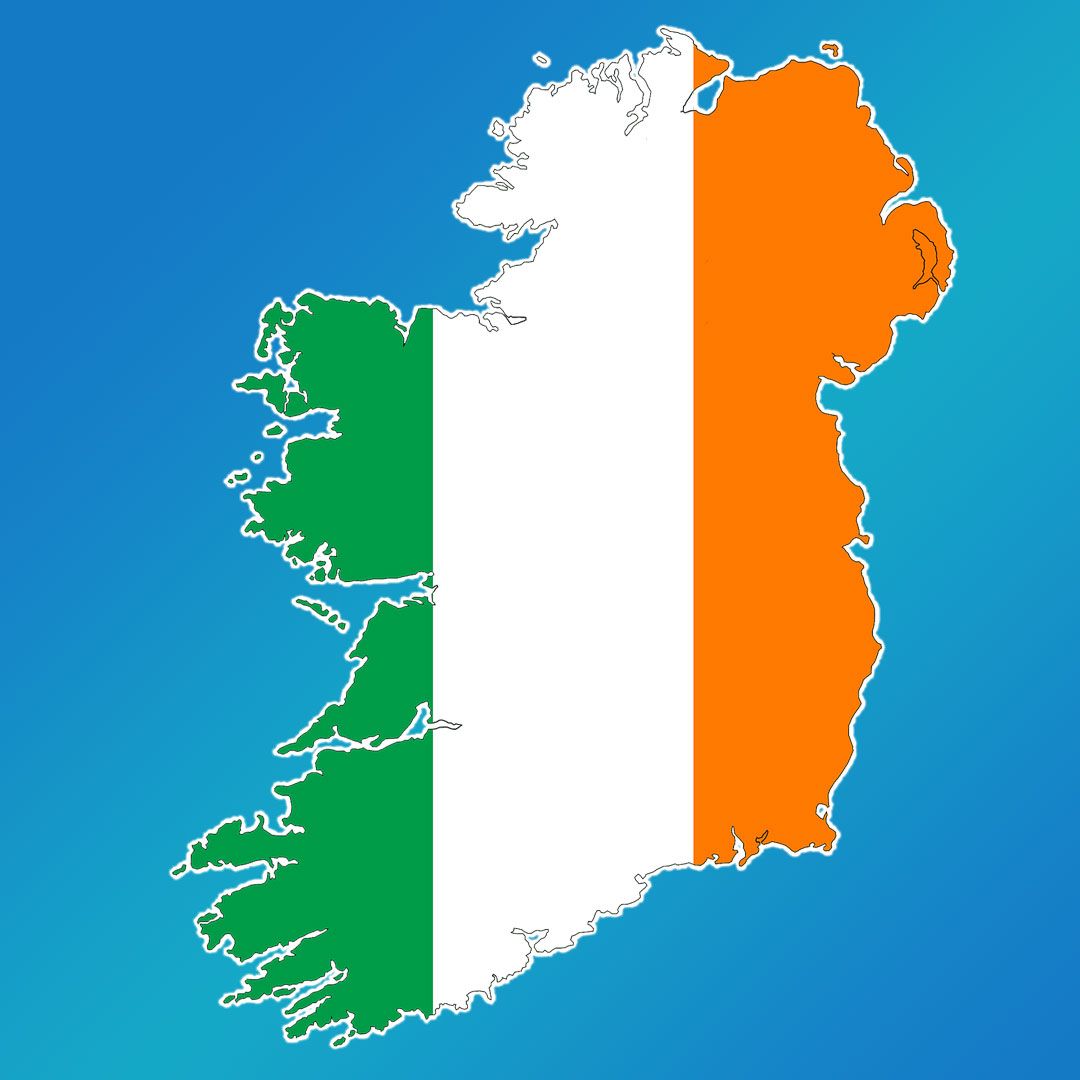
United Ireland poll
Linda Ervine places herself in the “don’t know” group when it comes to a united Ireland, saying: “I’m one of those people that will have to be convinced.” Almost one in five voters in Northern Ireland are in the same category, acco... [more]