
Cosmopolitanism and Patriotism
When Nationalists look to the spread of education among their countrymen as a help towards their ends, they must be blind to the lesson of the present, for to-day there is less of national spirit than there was twenty years ago, when education was less common. Irishmen of to-day are by the increased facilities for education brought more into contact with the cynical and sceptical ideas which prevail upon the other side of the Channel, and are more important of those who seek to disturb their ease of mind by pointing out the necessity of their more hearty co-operation in the cause of Ireland.
I could understand this apathy existing among a free and prosperous people, upon whom it could have no immediate effect, but that it should exist among Irishmen, whose position is such that only the most determined effort can succeed in recovering or even maintaining their national language and characteristics, is heart-sickening to all who have the welfare of their country at heart. For of this spirit and of the ‘little knowledge that is a dangerous thing’ is born that foolish fad (foolish at least when held by Irishmen)—the idea of an universal brotherhood.
To us it means that in pursuit of an idea, which has not yet passed the nebulous stage, we should fritter away the energies necessary to our own enfranchisement, only to find when too late that ‘the thing which was nearest to us’ had been left undone, and that when the day came to ratify this union of the nations, we had to enter it as the remnant of a once great nation, hoping to gain from the others some lessening of our own meanness, rather than as a free and self-reliant nation entering proudly into a compact with its equals.
But it is worthy of note, as showing how distant this day is, and how little sincerity there is in the supposedly general cry for this union of the peoples that those who in other countries are loudest in its propagation are found by the side of their countrymen when national policy demands it, and are willing to ally themselves with any Power, however inimical to human progress, provided that their doing so will be of advantage to their country. Those who doubt this assertion I recommend to the fact of the French Socialists a couple of years ago welcoming the Russians to France.
Among the arguments against a purely national policy, and against placing Ireland foremost in our schemes of self-education, are the following:—That the pursuit of this policy, and of this system of education, renders us unable to decide without prejudice questions of national honour or the merit of national genius.
I do not assert that patriotism may not, in ill-balanced minds, give rise to prejudice; but this objection also applies to cosmopolitanism, for we too often find cosmopolitans unwilling to give credit to the land of their birth when it was justly due, and in many instances too ready to decry her and to exaggerate her faults.
The standards by which we measure our great men, or determine our position in politics, being different, in our case the good of our country, in others the good of mankind (England included), we naturally come to different conclusions, but that does not imply narrowmindedness on our side, because even when deciding these questions we have to dissever ourselves from the bonds of party prejudice.
But we as Irishmen can have no interests in common with free countries and international treaties or questions of trade are of no direct interest to us, as any good resulting therefrom can only reach us by permission of England. In so far as they may be made useful in helping us towards freedom, they are of interest and no further.
We are told we should study the world before our portion of it, because of the broadening effect on our minds. It would be better for us that our view were narrowed down until we could see but one place and one interest—Ireland. What does it matter to a drowning man how wide the prospect? All his energies are directed to saving himself. And so with us as a nation; we have no time to study anything but our own salvation.
When I find an educated Irishman professing cosmopolitanism, I accredit it to the fact that it requires no sacrifices, or that he is sufficiently snobbish to be ashamed to profess a love for his country. You may mourn over the slavery of the Pole, or weep over the sorrows of the black, without any fear of being called upon to help them; but the inconvenience of professing patriotism is found when you are called to put these professions into practice.
We could pass this class of people by without troubling much to what side they belonged—for it really doesn’t matter much—but that it is much easier to propagate indifferentism among thoughtless people than enthusiasm, the former being the more comfortable creed. They are proud of the calm manner with which they can discuss the relations between England and Ireland, and assume a superiority over those who are wanting in this calmness.
But they go too far in their desire for impartiality, for they begin to believe that the sneers of Englishmen ignorant of Ireland are justified, and that England is not so much to blame in her treatment of this country. They have no sympathy with the just indignation of Irishmen, which is classed by them under the name of ‘sunburstry.’ They must not be shocked by anything too bitter, they like their politics sweetened. They’d like the history of Ireland with English perfidy omitted.
They do not wish to think of the defenceless women and children butchered by Cromwell in pursuit of a policy existent at the present day or of the tortures of ’98 and of the prisons of to-day. No, they will tell you ‘these English are our brothers, and we must not stir up strife against them.’
When Irishmen, maddened by the periodic waves of English tyranny which sweep this country, throw themselves into any movement however desperate, regardless of all personal consequences; these people tell us to bear with patience wrongs which they cannot feel, or which, if they do feel, they are afraid to attempt to remove. The effect which such opinions (were they general) would have upon our country, even in matters apparently remote from sentiment, justifies us in any bitterness of feeling.
With a rapidly decreasing population and a trade confined almost exclusively to imports, we are threatened with the loss of our National spirit—the only cohesive force which can give us power to remedy these things. But even when considered as a matter of sentiment, our loss will be great. The fairies will have left us; for those who were good to them will have passed away, and with them the kindly Irish nature. The cairn will no longer call up the prehistoric time in all the glory of its legendary magnificence.
Our valleys will call up no memories of the valour of chief and kerne to nerve us to emulation. Our streets and buildings will lose the memories of our greatness, and we shall become a people without a history—a nation without a soul. Having nothing to inspire us at home, we shall turn to England, becoming in time mere imitators of her music, art and literature.
We shall become a nation of money-seekers, whose highest ideal will be that of a bourgeois democracy, with nothing better to hope for than material prosperity, and no better prospect than to become in time an indistinguishable part of the English people.
Is this the end for which our forefathers hoped, and for which the men of ’98 and ’67 gave their lives? Is the unconquerable Celt, who has withstood for centuries the horrors of persecution and famine, to be conquered by his own apathy? Are the heirs of Celtic genius—the possessors of a boundless mine of inspiration in our legends and history—to become the servile imitators of a literature tainted with the rottenness of decay.
We can only prevent this by earnest work in the study of our language, history and resources, and by encouraging others in the same pursuits. We should make all other studies subservient to those, excepting, of course, our professional ones. And we shall not go unrewarded, even if we should not live to see our ideas realised, for we shall learn the lessons of self-denial and self-reliance which patriotism teaches, and we shall gain the added zest and enjoyment given to our lives by devotion to a noble cause.
Thus our work shall be its own reward, and when, ‘the night cometh when no man can work,’ we shall welcome our rest calmly and without fear.
Like one who wraps the drapery of his couch
About him, and lies down to pleasant dreams.
KILMACANOGUE.
Originally published in The United Irishman.
Article originally published on: Saturday 9th September 1899If you'd like to help with producing further articles, please sign up here!
More articles can be found here.
The project will follow in their footsteps along the path laid down by Hyde, O'Conaire, MacNeill, Cusack and many others through sharing news, ideas, articles of Irish cultural interest and more, as well as helping to support Irish language and cultural initiatives. You can find out more about An Claíomh Solais by clicking on the buttons below, or join our team as we begin the great Gaelic restoration!

You don't get to betray us and smile
You don’t get to lecture us on our blood and our past,
Famine headstones paving a road any can pass.
Our villages hollow, our young forced to flee,
While newcomers are housed and our people come last —
that’s your “compassionate” decree.
We remember the coffin ships, the millions who died,
Under cold British rules and indifferent pride.
That horror was on us by foreign command —
Not a blank cheque for every stranger to claim our land.
We emigrated through hardship, built lives far a
Read more...
Ode to John Devoy, a Forgotten Hero
A forgotten hero it has been said
Was born in Kill at a time many tears in this country were shed
Just before the Great Hunger this child did arrive
And lucky for us Irish he was one who would survive
An immense gra for Irish freedom he held in his heart
And it was when he was young that he first made a start
In his quest to release us Irish from beneath British rule
He was beaten for not singing “God Save the Queen” in his school
Involved in three wars he was one of a few
To take part in all conflicts and see
Read more...
An Interview with Patrick Quinlan from the National Party
Welcome to another in our series of interviews with prominent figures and rising stars in contemporary Irish nationalism!
Today we're talking to Patrick Quinlan from the National Party, a rapidly growing and influential political organisation in Ireland, one of the few if not the only such group with actual elected representatives. Read on to learn about engaging with the system, winning hearts and minds, and the political future for Irish nationalism!
Perhaps you could tell us a little bit about yourself to begin with?
I'm Patrick Quin
Read more...
An interview with Rob Carry
Good afternoon! As part of our ongoing series on rising nationalist stars and voices in Ireland, we're delighted to be able to introduce local community activist, businessman and politician, Rob Carry!
We've been talking about his amazing work for and with his community, as well as his aspirations and plans for the future.
ACS: Can you tell us a little about yourself, your background, and where you're coming from?
RC: Sure. So I’m a small business owner (I run a commercial gym, a martial arts club
Read more...
An Interview with Gavin from Offgrid Ireland
Good morning and welcome to another in our series of interviews with prominent figures and rising stars in modern Irish nationalism!
Today we're talking to Gavin from a prominent and influential online discussion group, the X SPACES Éire Community. This very active group has at one time or another hosted many well-known nationalist names and continues to grow in both size and influence.
ACS: Can you share with our readers some of your background and a little about who you are?
OI: I am an Offaly man, born and bred, now in my la
Read more...
A New Voice For Ireland
We are pleased to introduce a new rising star among Irish nationalists - although she needs no introduction for many of you who have attended Irish Ireland protests recently - Ciara Ní Mhainnín! Her uncompromising voice offers a clear challenge to the establishment and a great example for us all to follow.
Ciara very kindly took the time to join us in an online interview, which we are delighted to publish here.
ACS: What made you decide to get involved with the Irish Ireland cause, was there one particular event or was it more of a process?
Read more...
Recent News
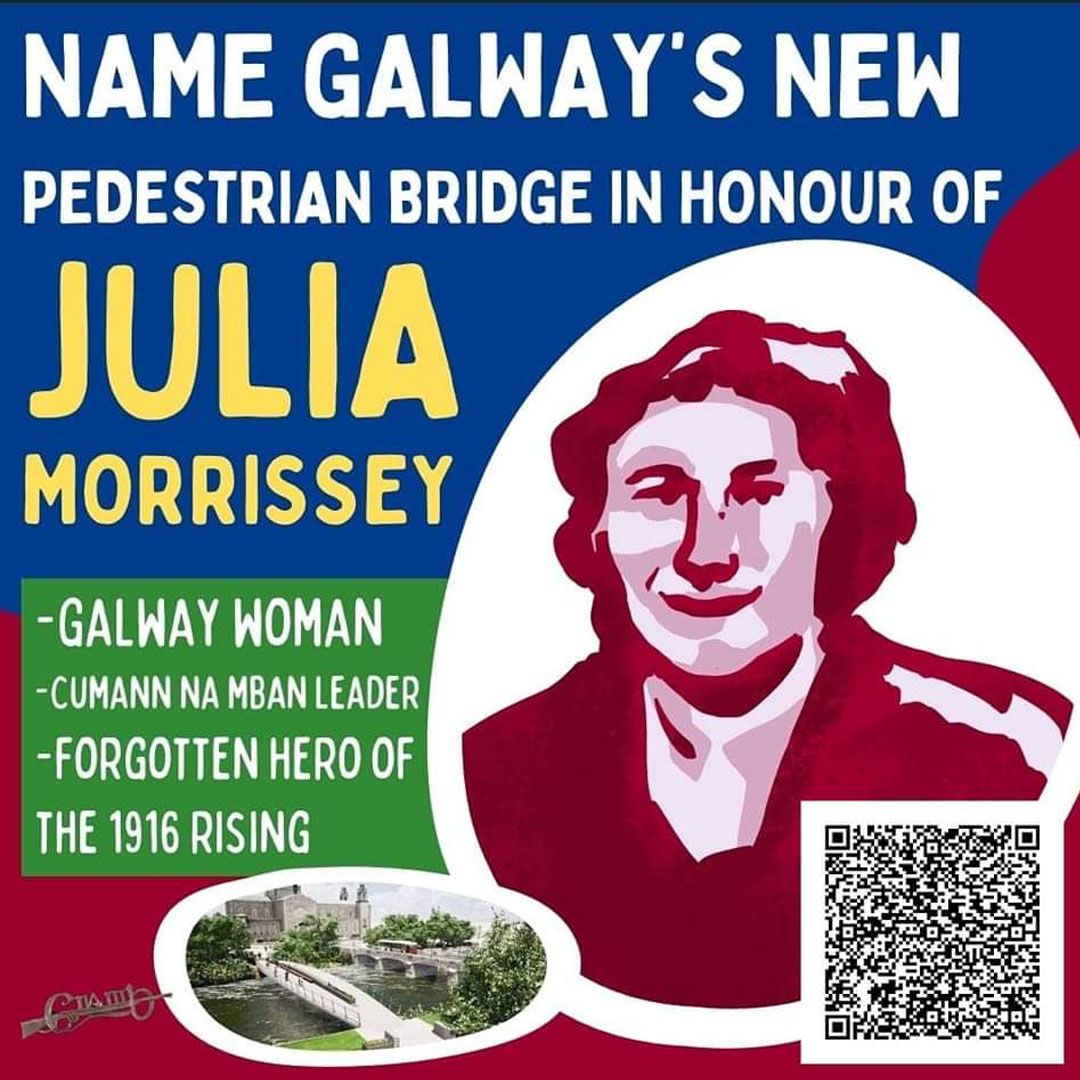
Name Galway's New Pedestrian Bridge in Honour of 1916 Hero Julia Morrissey
An Athenry native, Julia Morrissey, was a key figure in Cumann na mBan's Galway branch. In 1916, she commanded a group of 50 women during Easter week, as part of the rebellion in Galway that was led by Liam Mellows. When Mellows first came to Athenry in 1915, Mor... [more]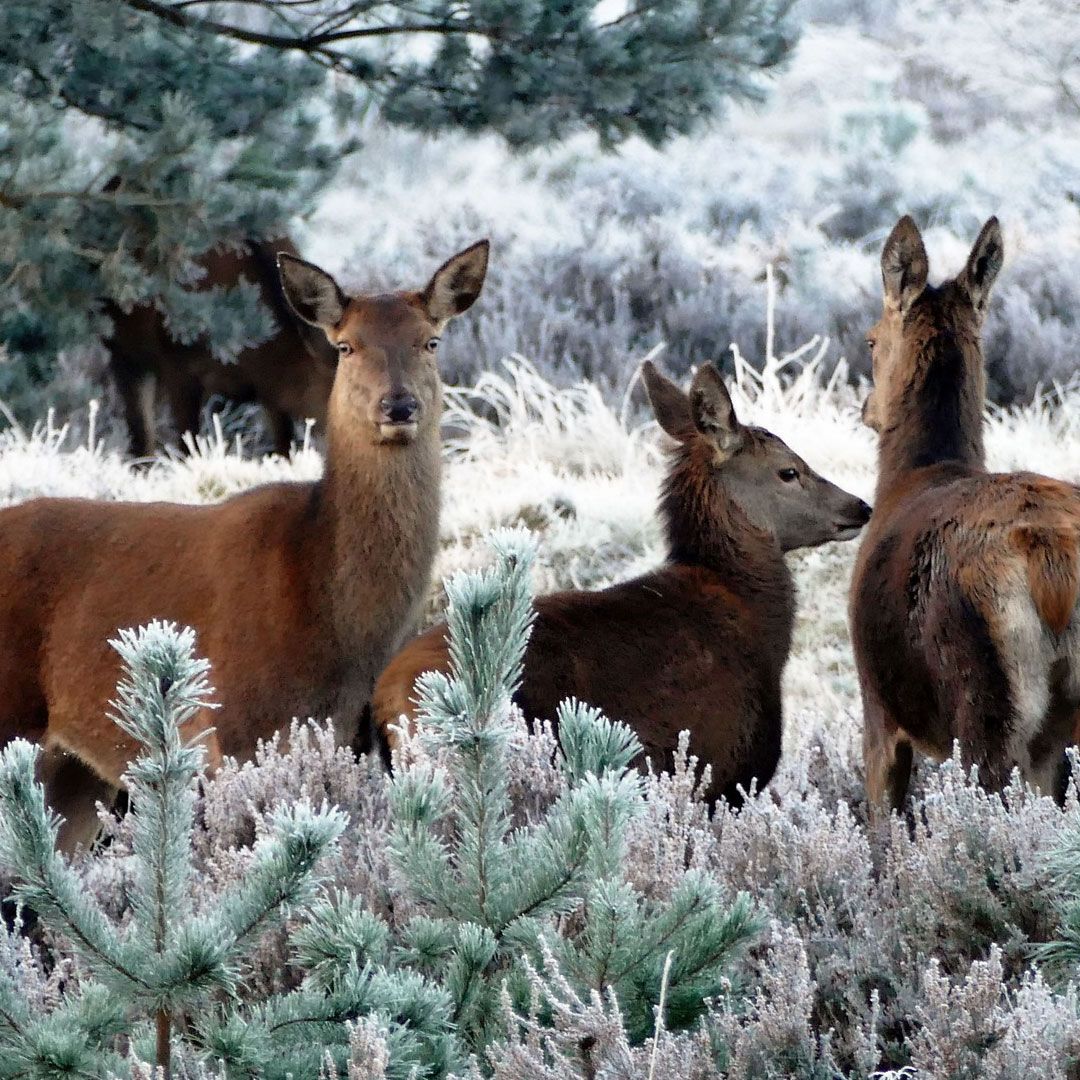
Human activity discovered in Ireland 33000 years ago
A REINDEER BONE fragment uncovered in a cave contains a revelation set to dramatically alter the understanding of Irish human history. The bone fragment was found at Castlepook Cave near Doneraile in north Cork where a mammoth bone was discovered in 1972. T... [more]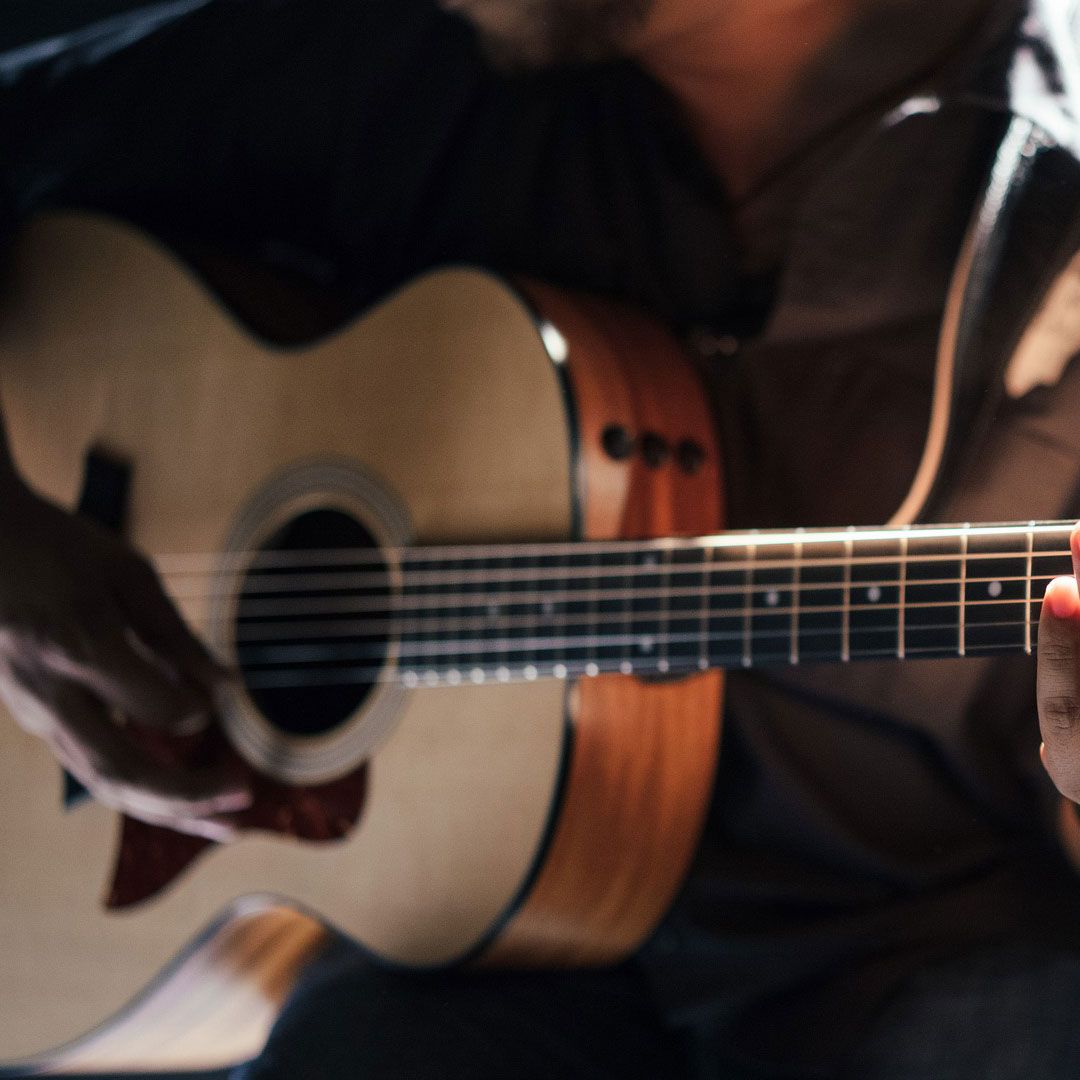
Wolfe Tones announce anniversary gig
After breaking records at Electric Picnic over the weekend, the Wolfe Tones are set to mark six decades of making music with an anniversary gig in Dublin next year. The Wolfe Tones drew the largest crowd to date to the festival’s Electric Arena on Sunday as a s... [more]
RIA culture night 2023
Come and join us on Culture Night 2023, we will have lots of cultural activities for all ages! Explore the Royal Irish Academy - a hidden Georgian gem tucked away on Dawson Street. View the earliest example of Irish writing - the 6th century Cathach, have a go at som... [more]
More than one million people are actively learning Irish
More than one million people are actively learning Irish on Duolingo according to data from the language app. A recent report (June 2021) listed Irish as the 16th most popular language to learn on the app, with 1.10 million users actively learning the language. ... [more]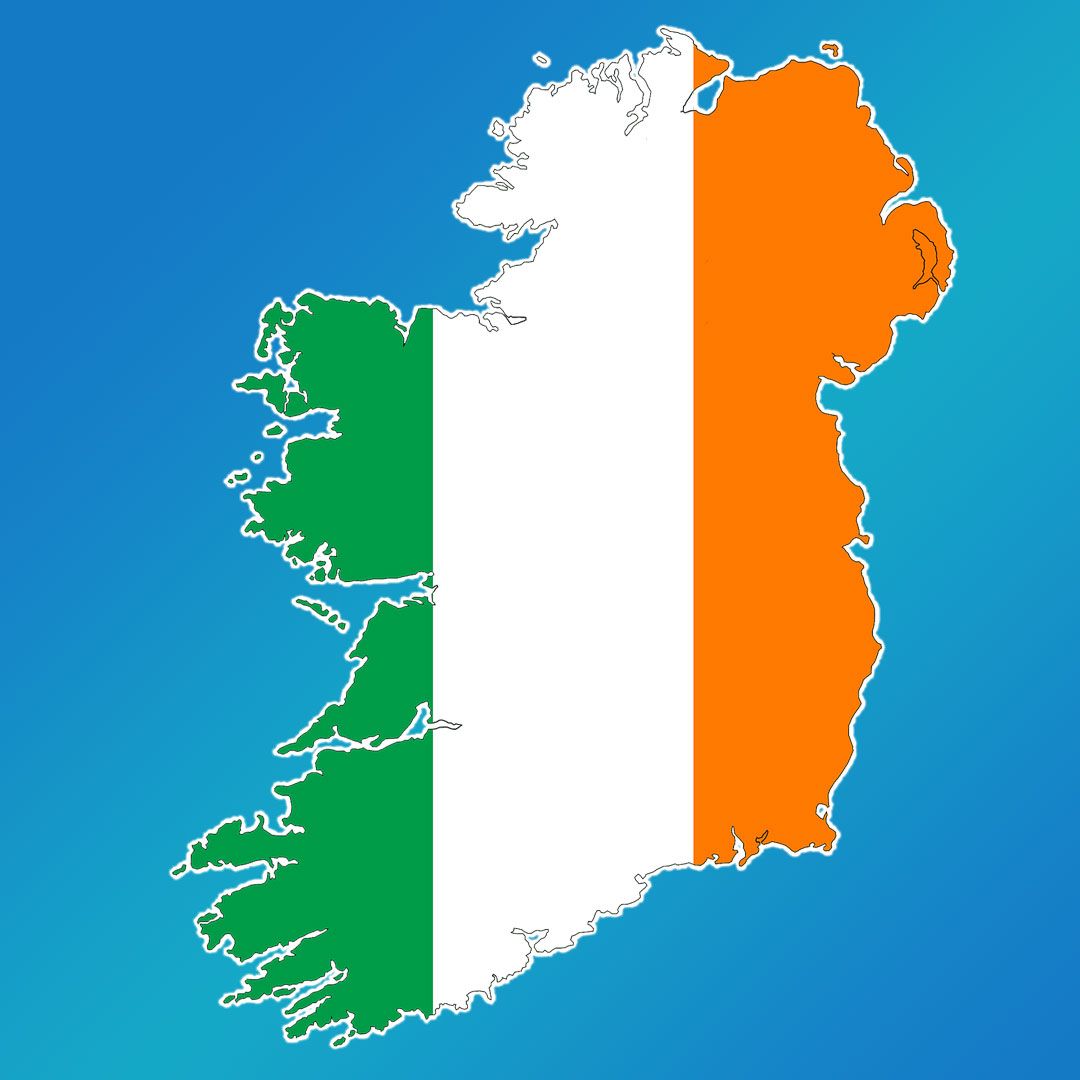
United Ireland poll
Linda Ervine places herself in the “don’t know” group when it comes to a united Ireland, saying: “I’m one of those people that will have to be convinced.” Almost one in five voters in Northern Ireland are in the same category, acco... [more]