
The Necessity for De-Anglicising Ireland
When we speak of 'The Necessity for De-Anglicising the Irish Nation', we mean it, not as a protest against imitating what is best in the English people, for that would be absurd, but rather to show the folly of neglecting what is Irish, and hastening to adopt, pell-mell, and indiscriminately, everything that is English, simply because it is English.
This is a question which most Irishmen will naturally look at from a National point of view, but it is one which ought also to claim the sympathies of every intelligent Unionist, and which, as I know, does claim the sympathy of many.
If we take a bird's eye view of our island today, and compare it with what it used to be, we must be struck by the extraordinary fact that the nation which was once, as every one admits, one of the most classically learned and cultured nations in Europe, is now one of the least so; how one of the most reading and literary peoples has become one of the least studious and most un-literary, and how the present art products of one of the quickest, most sensitive, and most artistic races on earth are now only distinguished for their hideousness.
I shall endeavour to show that this failure of the Irish people in recent times has been largely brought about by the race diverging during this century from the right path, and ceasing to be Irish without becoming English. I shall attempt to show that with the bulk of the people this change took place quite recently, much more recently than most people imagine, and is, in fact, still going on.
I should also like to call attention to the illogical position of men who drop their own language to speak English, of men who translate their euphonious Irish names into English monosyllables, of men who read English books, and know nothing about Gaelic literature, nevertheless protesting as a matter of sentiment that they hate the country which at every hand's turn they rush to imitate.
I wish to show you that in Anglicising ourselves wholesale we have thrown away with a light heart the best claim which we have upon the world's recognition of us as a separate nationality. What did Mazzini say? What is Goldwin Smith never tired of declaiming? What do the Spectator and Saturday Review harp on? That we ought to be content as an integral part of the United Kingdom because we have lost the notes of nationality, our language and customs.
It has always been very curious to me how Irish sentiment sticks in this half-way house -- how it continues to apparently hate the English, and at the same time continues to imitate them; how it continues to clamour for recognition as a distinct nationality, and at the same time throws away with both hands what would make it so. If Irishmen only went a little farther they would become good Englishmen in sentiment also. But -- illogical as it appears -- there seems not the slightest sign or probability of their taking that step.
It is the curious certainty that come what may Irishmen will continue to resist English rule, even though it should be for their good, which prevents many of our nation from becoming Unionists upon the spot. It is a fact, and we must face it as a fact, that although they adopt English habits and copy England in every way, the great bulk of Irishmen and Irishwomen over the whole world are known to be filled with a dull, ever-abiding animosity against her, and right or wrong -- to grieve when she prospers, and joy when she is hurt.
Such movements as Young Irelandism, Fenianism, Land Leagueism, and Parliamentary obstruction seem always to gain their sympathy and support. It is just because there appears no earthly chance of their becoming good members of the Empire that I urge that they should not remain in the anomalous position they are in, but since they absolutely refuse to become the one thing, that they become the other; cultivate what they have rejected, and build up an Irish nation on Irish lines.
But you ask, why should we wish to make Ireland more Celtic than it is -- why should we de-Anglicise it at all?
I answer because the Irish race is at present in a most anomalous position, imitating England and yet apparently hating it. How can it produce anything good in literature, art, or institutions as long as it is actuated by motives so contradictory? Besides, I believe it is our Gaelic past which, though the Irish race does not recognise it just at present, is really at the bottom of the Irish heart, and prevents us becoming citizens of the Empire, as, I think, can be easily proved.
To say that Ireland has not prospered under English rule is simply a truism; all the world admits it, England does not deny it. But the English retort is ready. You have not prospered, they say, because you would not settle down contentedly, like the Scotch, and form part of the Empire. 'Twenty years of good, resolute, grandfatherly government', said a well-known Englishman, will solve the Irish question. He possibly made the period too short, but let us suppose this.
Let us suppose for a moment -- which is impossible -- that there were to arise a series of Cromwells in England for the space of one hundred years, able administrators of the Empire, careful rulers of Ireland, developing to the utmost our national resources, whilst they unremittingly stamped out every spark of national feeling, making Ireland a land of wealth and factories, whilst they extinguished every thought and every idea that was Irish, and left us, at last, after a hundred years of good government, fat, wealthy, and populous, but with all our characteristics gone, with every external that at present differentiates us from the English lost or dropped; all our Irish names of places and people turned into English names; the Irish language completely extinct; the O's and the Macs dropped; our Irish intonation changed, as far as possible by English schoolmasters into something English; our history no longer remembered or taught; the names of our rebels and martyrs blotted out; our battlefields and traditions forgotten; the fact that we were not of Saxon origin dropped out of sight and memory, and let me now put the question -- How many Irishmen are there who would purchase material prosperity at such a price? It is exactly such a question as this and the answer to it that shows the difference between the English and Irish race. Nine Englishmen out of ten would jump to make the exchange, and I as firmly believe that nine Irishmen out of ten would indignantly refuse it.
And yet this awful idea of complete Anglicisation, which I have here put before you in all its crudity is, and has been, making silent inroads upon us for nearly a century.
Its inroads have been silent, because, had the Gaelic race perceived what was being done, or had they been once warned of what was taking place in their own midst, they would, I think, never have allowed it. When the picture of complete Anglicisation is drawn for them in all its nakedness Irish sentimentality becomes suddenly a power and refuses to surrender its birthright...
So much for the greatest stroke of all in our Anglicisation, the loss of our language. I have often heard people thank God that if the English gave us nothing else they gave us at least their language. In this way they put a bold face upon the matter, and pretend that the Irish language is not worth knowing, and has no literature. But the Irish language is worth knowing, or why would the greatest philologists of Germany, France, and Italy be emulously studying it, and it does possess a literature, or why would a German savant have made the calculation that the books written in Irish between the eleventh and seventeenth centuries, and still extant, would fill a thousand octavo volumes.
I have no hesitation at all in saying that every Irish-feeling Irishman, who hates the reproach of West-Britonism, should set himself to encourage the efforts, which are being made to keep alive our once great national tongue. The losing of it is our greatest blow, and the sorest stroke that the rapid Anglicisation of Ireland has inflicted upon us. In order to de-Anglicise ourselves we must at once arrest the decay of the language. We must bring pressure upon our politicians not to snuff it out by their tacit discouragement merely because they do not happen themselves to understand it.
We must arouse some spark of patriotic inspiration among the peasantry who still use the language, and put an end to the shameful state of feeling -- a thousand-tongued reproach to our leaders and statesmen -- which makes young men and women blush and hang their heads when overheard speaking their own language.
Maynooth has at last come splendidly to the front, and it is now incumbent upon every clerical student to attend lectures in the Irish language and history during the first three years of his course. But in order to keep the Irish language alive where it is still spoken -- which is the utmost we can at present aspire to -- nothing less than a house-to-house visitation and exhortation of the people themselves will do, something -- though with a very different purpose -- analogous to the procedure that James Stephens adopted throughout Ireland when he found her like a corpse on the dissecting table.
This and some system of giving medals or badges of honour to every family who will guarantee that they have always spoken Irish amongst themselves during the year. But unfortunately, distracted as we are and torn by contending factions, it is impossible to find either men or money to carry out this simple remedy, although to a dispassionate foreigner -- to a Zeuss, Jubainville, Zimmer, Kuno Meyer, Windisch, or Ascoli, and the rest -- this is of greater importance than whether Mr. Redmond or Mr. MacCarthy lead the largest wing of the Irish party for the moment, or Mr. So-and-So succeed with his election petition. To a person taking a bird's eye view of the situation a hundred or five hundred years hence, believe me, it will also appear of greater importance than any mere temporary wrangle, but, unhappily, our countrymen cannot be brought to see this.
We can, however, insist, and we shall insist if Home Rule be carried, that the Irish language, which so many foreign scholars of the first calibre find so worthy of study, shall be placed on a par with -- or even above -- Greek, Latin, and modern languages, in all examinations held under the Irish Government. We can also insist, and we shall insist, that in those baronies where the children speak Irish, Irish shall be taught, and that Irish-speaking schoolmasters, petty sessions clerks, and even magistrates be appointed in Irish-speaking districts. If all this were done, it should not be very difficult, with the aid of the foremost foreign scholars, to bring about a tone of thought which would make it disgraceful for an educated Irishman especially of the old Celtic race, MacDermotts, O'Conors, O'Sullivans, MacCarthys, O'Neills -- to be ignorant of his own language -- would make it at least as disgraceful as for an educated Jew to be quite ignorant of Hebrew...
I have now mentioned a few of the principal points on which it would be desirable for us to move, with a view to de-Anglicising ourselves; but perhaps the principal point of all I have taken for granted. That is the necessity for encouraging the use of Anglo-Irish literature instead of English books, especially instead of English periodicals. We must set our face sternly against penny dreadfuls, shilling shockers, and still more, the garbage of vulgar English weeklies like Bow Bells and the Police Intelligence.
Every house should have a copy of Moore and Davis. In a word, we must strive to cultivate everything that is most racial, most smacking of the soil, most Gaelic, most Irish, because in spite of the little admixture of Saxon blood in the north-east corner, this island is and will ever remain Celtic at the core, far more Celtic than most people imagine, because, as I have shown you, the names of our people are no criterion of their race.
On racial lines, then, we shall best develop, following the bent of our own natures; and, in order to do this, we must create a strong feeling against West-Britonism, for it -- if we give it the least chance, or show it the smallest quarter -- will overwhelm us like a flood, and we shall find ourselves toiling painfully behind the English at each step following the same fashions, only six months behind the English ones; reading the same books, only months behind them; taking up the same fads, after they have become stale there, following them in our dress, literature, music, games, and ideas, only a long time after them and a vast way behind.
We will become, what, I fear, we are largely at present, a nation of imitators, the Japanese of Western Europe, lost to the power of native initiative and alive only to second-hand assimilation. I do not think I am overrating this danger. We are probably at once the most assimilative and the most sensitive nation in Europe. A lady in Boston said to me that the Irish immigrants had become Americanised on the journey out before ever they landed at Castle Gardens. And when I ventured to regret it, she said, shrewdly, 'If they did not at once become Americanised they would not be Irish.' I knew fifteen Irish workmen who were working in a haggard in England give up talking Irish amongst themselves because the English farmer laughed at them. And yet O'Connell used to call us the 'finest peasantry in Europe'.
Unfortunately, he took little care that we should remain so. We must teach ourselves to be less sensitive, we must teach ourselves not to be ashamed of ourselves, because the Gaelic people can never produce its best before the world as long as it remains tied to the apron-strings of another race and another island, waiting for it to move before it will venture to take any step itself.
In conclusion, I would earnestly appeal to every one, whether Unionist or Nationalist, who wishes to see the Irish nation produce its best -- surely whatever our politics are we all wish that -- to set his face against this constant running to England for our books, literature, music, games, fashions, and ideas. I appeal to every one whatever his politics -- for this is no political matter -- to do his best to help the Irish race to develop in future upon Irish lines, even at the risk of encouraging national aspirations, because upon Irish lines alone can the Irish race once more become what it was of yore -- one of the most original, artistic, literary, and charming peoples of Europe.
by Douglas Hyde, delivered before the Irish National Literary Society in Dublin, 25 November 1892.
Article originally published on: Friday 25th November 1892If you'd like to help with producing further articles, please sign up here!
More articles can be found here.
The project will follow in their footsteps along the path laid down by Hyde, O'Conaire, MacNeill, Cusack and many others through sharing news, ideas, articles of Irish cultural interest and more, as well as helping to support Irish language and cultural initiatives. You can find out more about An Claíomh Solais by clicking on the buttons below, or join our team as we begin the great Gaelic restoration!
You don't get to betray us and smile
You don’t get to lecture us on our blood and our past,
Famine headstones paving a road any can pass.
Our villages hollow, our young forced to flee,
While newcomers are housed and our people come last —
that’s your “compassionate” decree.
We remember the coffin ships, the millions who died,
Under cold British rules and indifferent pride.
That horror was on us by foreign command —
Not a blank cheque for every stranger to claim our land.
We emigrated through hardship, built lives far a
Read more...
Ode to John Devoy, a Forgotten Hero
A forgotten hero it has been said
Was born in Kill at a time many tears in this country were shed
Just before the Great Hunger this child did arrive
And lucky for us Irish he was one who would survive
An immense gra for Irish freedom he held in his heart
And it was when he was young that he first made a start
In his quest to release us Irish from beneath British rule
He was beaten for not singing “God Save the Queen” in his school
Involved in three wars he was one of a few
To take part in all conflicts and see
Read more...
An Interview with Patrick Quinlan from the National Party
Welcome to another in our series of interviews with prominent figures and rising stars in contemporary Irish nationalism!
Today we're talking to Patrick Quinlan from the National Party, a rapidly growing and influential political organisation in Ireland, one of the few if not the only such group with actual elected representatives. Read on to learn about engaging with the system, winning hearts and minds, and the political future for Irish nationalism!
Perhaps you could tell us a little bit about yourself to begin with?
I'm Patrick Quin
Read more...
An interview with Rob Carry
Good afternoon! As part of our ongoing series on rising nationalist stars and voices in Ireland, we're delighted to be able to introduce local community activist, businessman and politician, Rob Carry!
We've been talking about his amazing work for and with his community, as well as his aspirations and plans for the future.
ACS: Can you tell us a little about yourself, your background, and where you're coming from?
RC: Sure. So I’m a small business owner (I run a commercial gym, a martial arts club
Read more...
An Interview with Gavin from Offgrid Ireland
Good morning and welcome to another in our series of interviews with prominent figures and rising stars in modern Irish nationalism!
Today we're talking to Gavin from a prominent and influential online discussion group, the X SPACES Éire Community. This very active group has at one time or another hosted many well-known nationalist names and continues to grow in both size and influence.
ACS: Can you share with our readers some of your background and a little about who you are?
OI: I am an Offaly man, born and bred, now in my la
Read more...
A New Voice For Ireland
We are pleased to introduce a new rising star among Irish nationalists - although she needs no introduction for many of you who have attended Irish Ireland protests recently - Ciara Ní Mhainnín! Her uncompromising voice offers a clear challenge to the establishment and a great example for us all to follow.
Ciara very kindly took the time to join us in an online interview, which we are delighted to publish here.
ACS: What made you decide to get involved with the Irish Ireland cause, was there one particular event or was it more of a process?
Read more...
Recent News
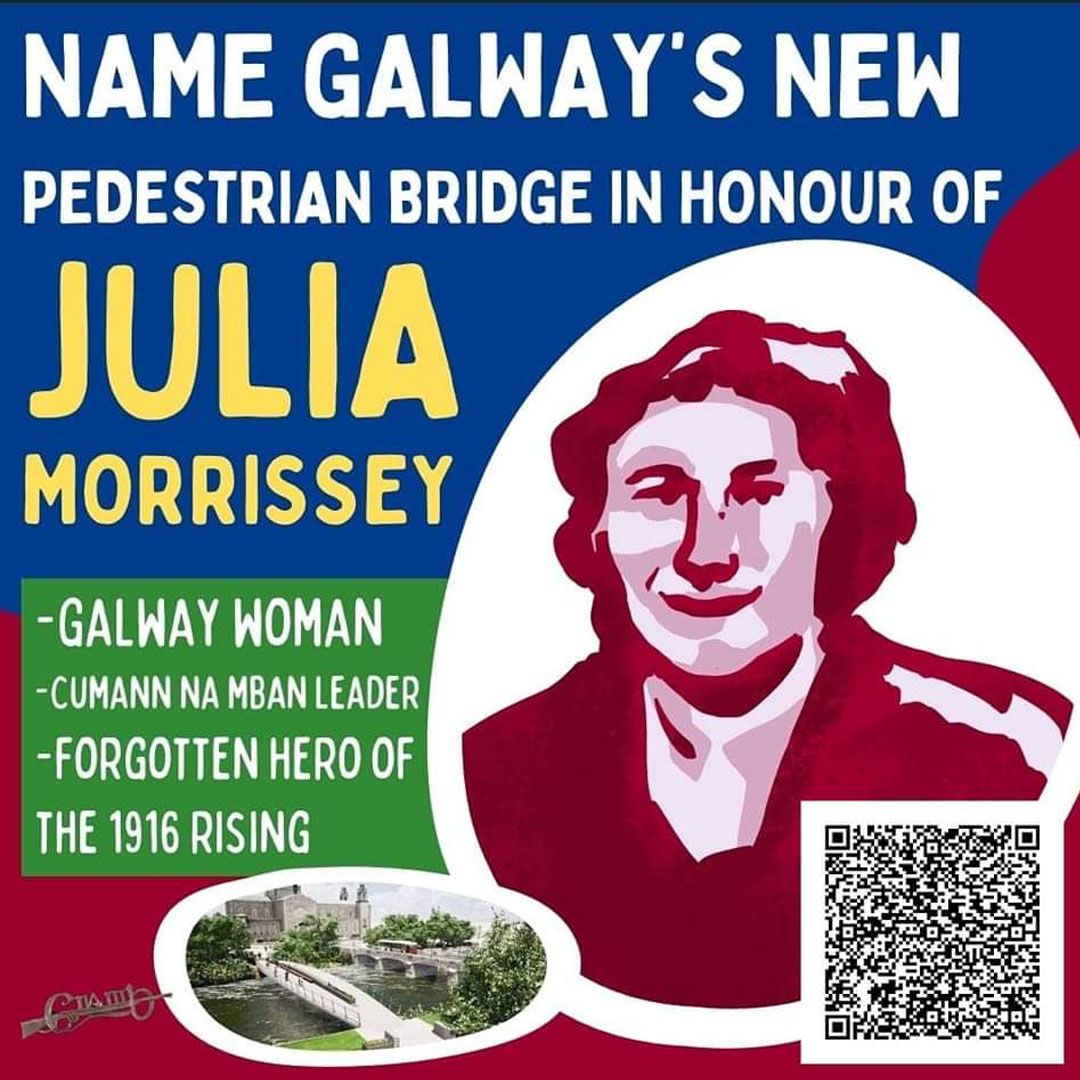
Name Galway's New Pedestrian Bridge in Honour of 1916 Hero Julia Morrissey
An Athenry native, Julia Morrissey, was a key figure in Cumann na mBan's Galway branch. In 1916, she commanded a group of 50 women during Easter week, as part of the rebellion in Galway that was led by Liam Mellows. When Mellows first came to Athenry in 1915, Mor... [more]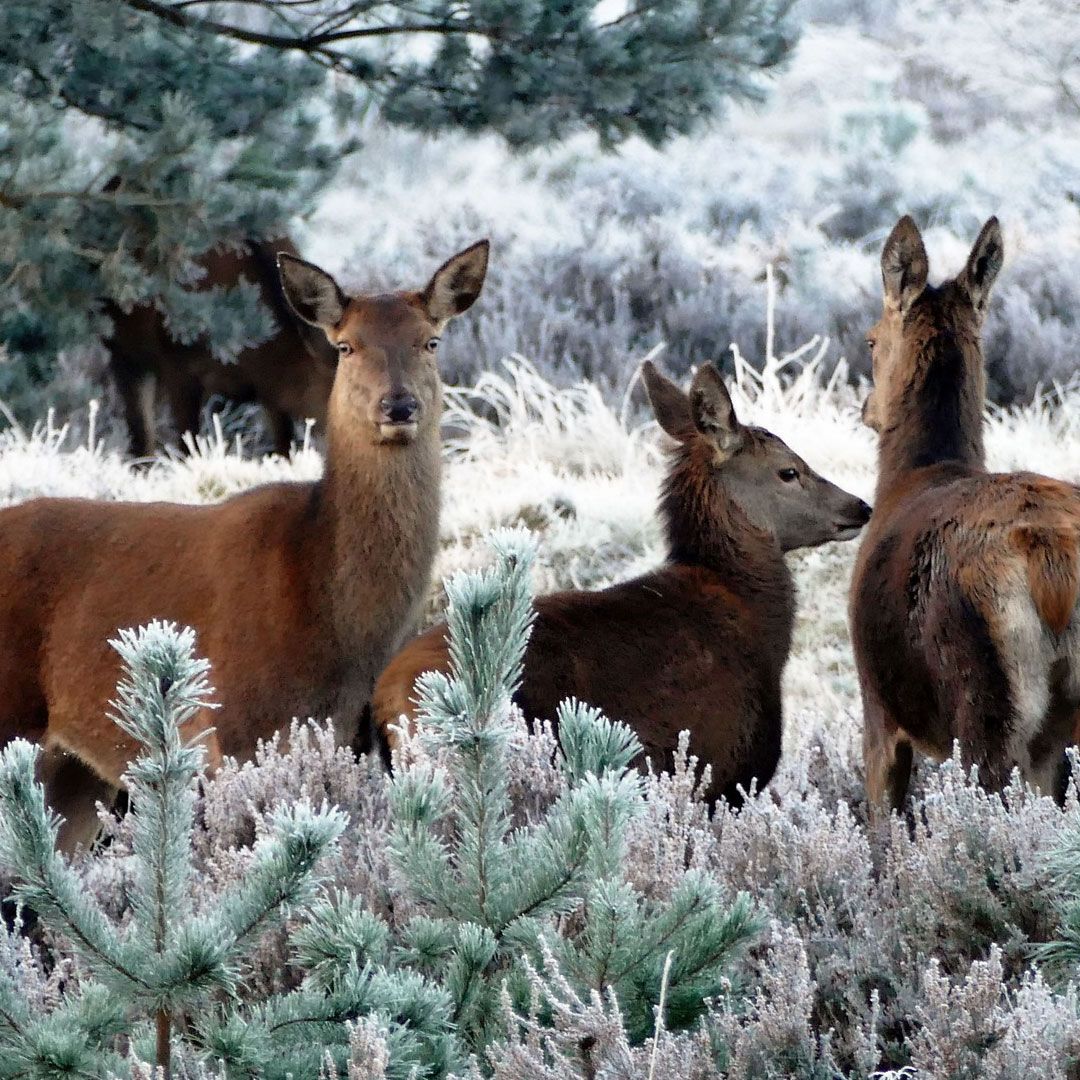
Human activity discovered in Ireland 33000 years ago
A REINDEER BONE fragment uncovered in a cave contains a revelation set to dramatically alter the understanding of Irish human history. The bone fragment was found at Castlepook Cave near Doneraile in north Cork where a mammoth bone was discovered in 1972. T... [more]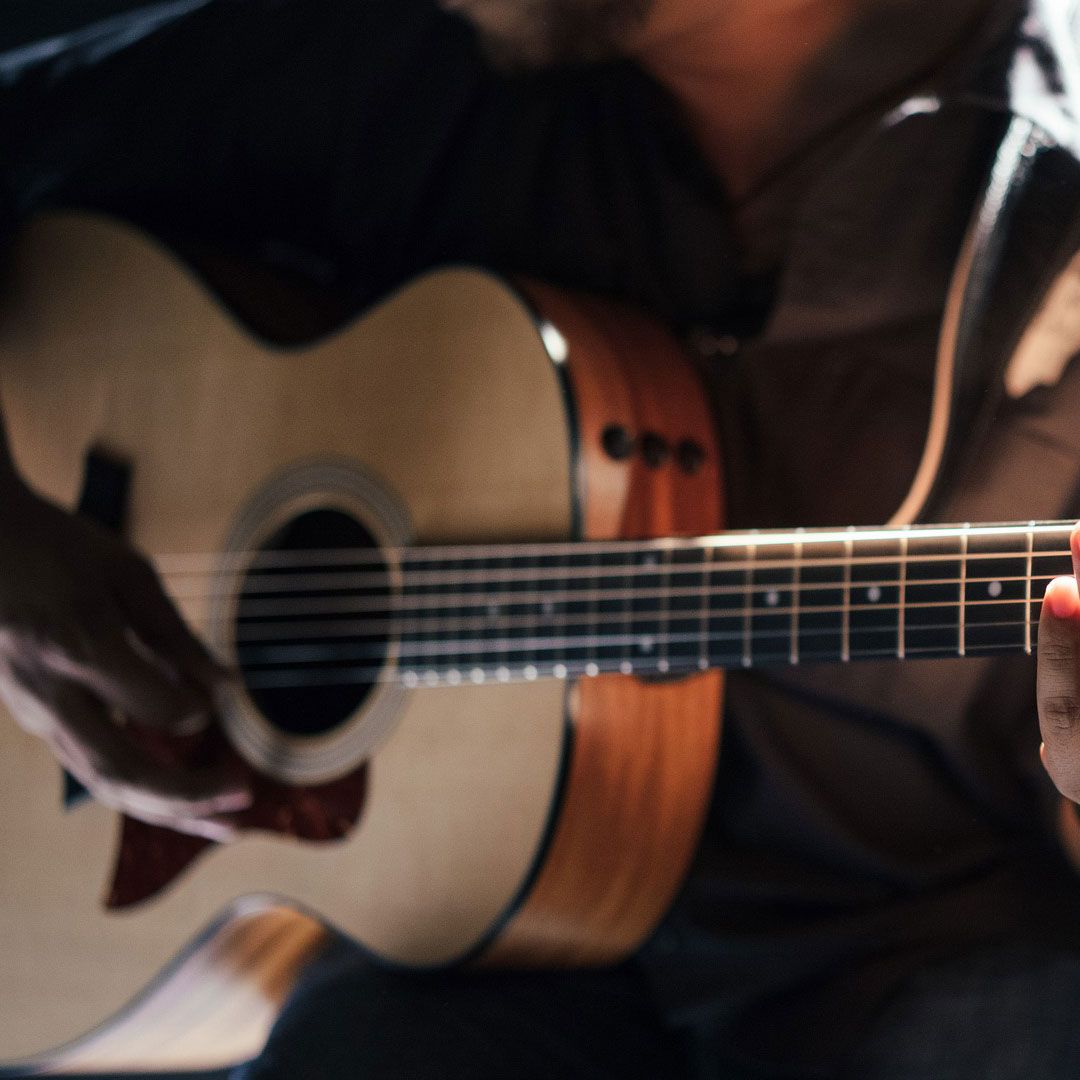
Wolfe Tones announce anniversary gig
After breaking records at Electric Picnic over the weekend, the Wolfe Tones are set to mark six decades of making music with an anniversary gig in Dublin next year. The Wolfe Tones drew the largest crowd to date to the festival’s Electric Arena on Sunday as a s... [more]
RIA culture night 2023
Come and join us on Culture Night 2023, we will have lots of cultural activities for all ages! Explore the Royal Irish Academy - a hidden Georgian gem tucked away on Dawson Street. View the earliest example of Irish writing - the 6th century Cathach, have a go at som... [more]
More than one million people are actively learning Irish
More than one million people are actively learning Irish on Duolingo according to data from the language app. A recent report (June 2021) listed Irish as the 16th most popular language to learn on the app, with 1.10 million users actively learning the language. ... [more]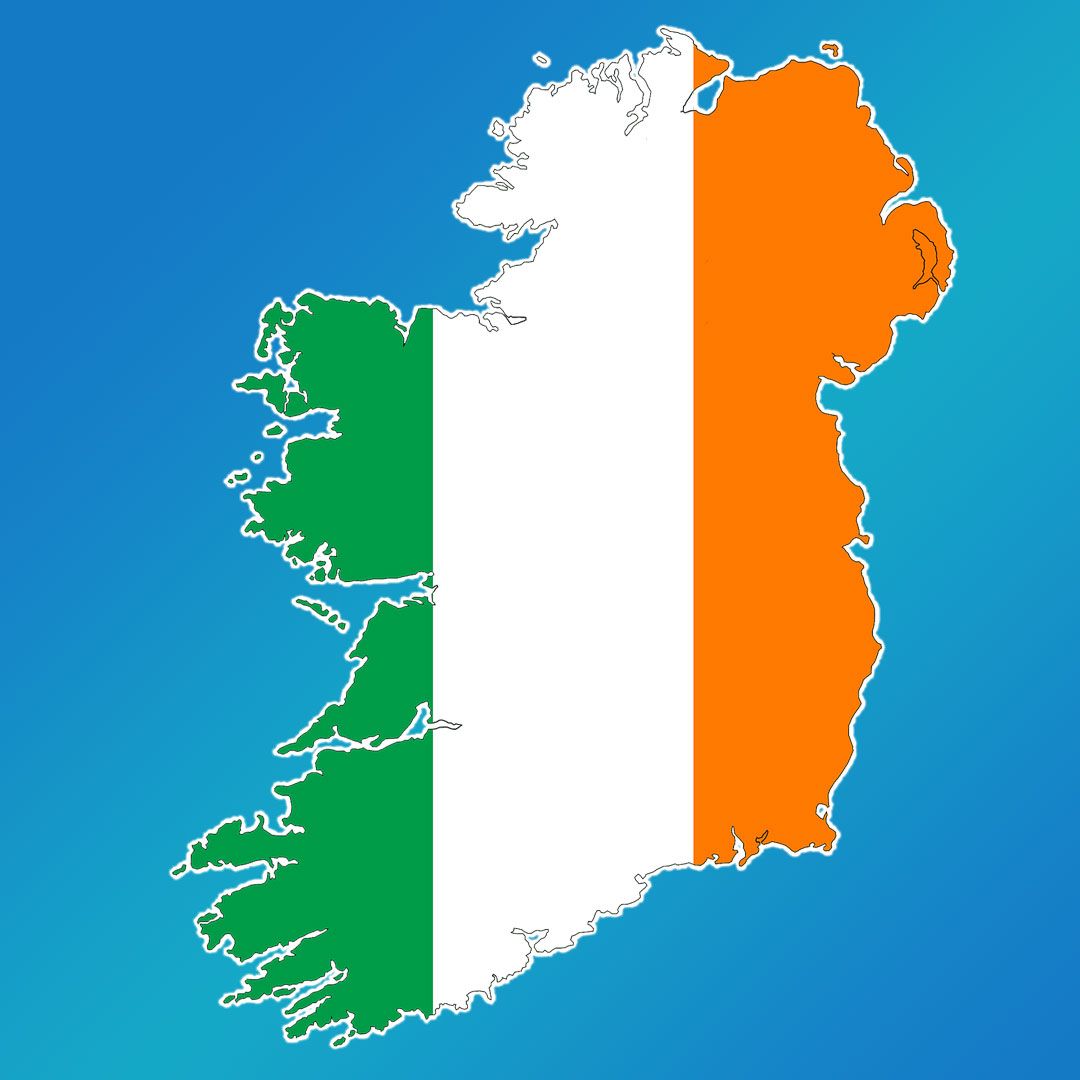
United Ireland poll
Linda Ervine places herself in the “don’t know” group when it comes to a united Ireland, saying: “I’m one of those people that will have to be convinced.” Almost one in five voters in Northern Ireland are in the same category, acco... [more]